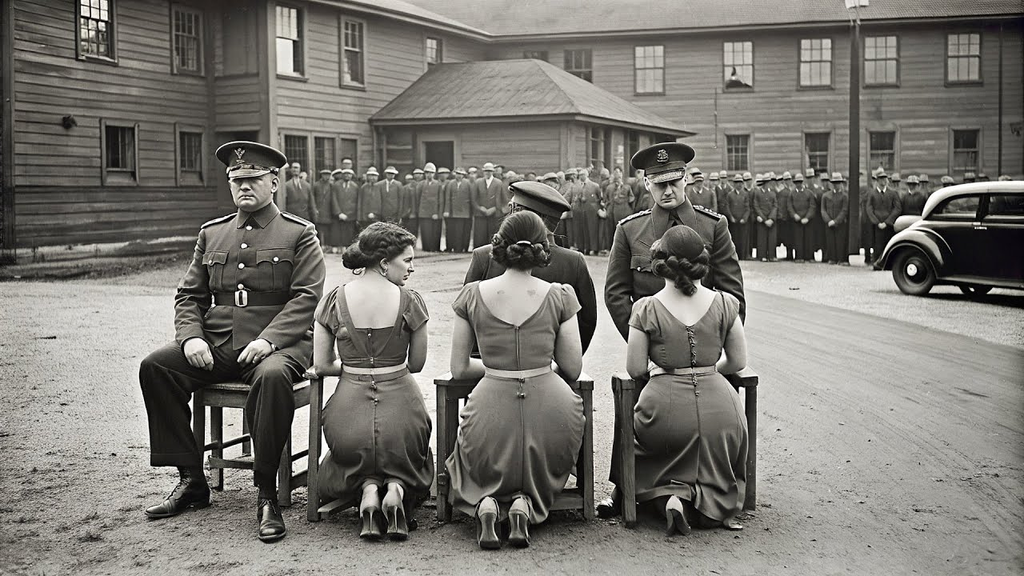
The American Plan: The Secret Program That Locked Up Thousands of Innocent Women
In 1917, the United States entered World War I. Millions of young men were drafted and sent to training camps across the country. Military leaders had a fear that had nothing to do with German soldiers: venereal disease.
Officials worried that sexually transmitted infections would weaken the army before it ever reached the battlefield. Their solution did not target the soldiers. It targeted women.
A Law Aimed at Women
In 1918, Congress passed the Chamberlain-Kahn Act. Together with new state and local laws, it created what became known as the “American Plan.”
Under this plan, health officials and police were allowed to detain any woman they “reasonably suspected” of carrying a venereal disease. In practice, “reasonable suspicion” could mean almost anything. A woman walking alone at night, a woman talking to a soldier, a woman sitting in a restaurant without a man, a woman who was poor, an immigrant, or Black, or simply a woman someone in town disliked.
Zones were drawn around military camps, and women inside them were watched closely. Many were arrested without warning.
Forced Examinations and Detention
Once detained, women were forced to undergo invasive medical examinations. Those who tested positive, and sometimes those who did not, were locked away in detention hospitals, reformatories, and jails.
There were no trials, no lawyers, and no judges. Many women had no idea how long they would be held.
The treatments of the era were brutal. Before antibiotics, venereal diseases were treated with injections of mercury and arsenic-based drugs. These treatments were painful, and they could cause serious side effects, including damage to the kidneys, teeth, and nervous system.
Women were also expected to work, follow strict rules, and attend lectures on morality. Some detention centers tried to “reform” the women as if they were criminals.
The Story of Nina McCall
One of the best-known victims of the American Plan was Nina McCall, an 18-year-old from the small town of Alma, Michigan.
In the fall of 1918, she was stopped outside the local post office by a sheriff and told she needed to be examined. She insisted she had done nothing wrong. Officials told her she had tested positive and sent her to a detention hospital in another town.
For about three months she was held there and given painful mercury treatments. When she was finally released, she was told she could be arrested again at any time.
Nina did something few women dared to do. She sued the officials who had detained her. Her case went to court, but she lost. The judges ruled that the government had the right to act in the name of public health.
How Many Women Were Detained
During World War I alone, historians estimate that more than 30,000 women were detained under the American Plan. Far more were examined, watched, and harassed.
Soldiers, on the other hand, were rarely punished. Men were given lectures and preventive kits. Women were given cells.
A Program That Did Not End
The American Plan did not disappear when the war ended. Laws written in 1918 stayed on the books in many states. During World War II, a new wave of arrests swept through towns near military bases. In some places, the laws continued to be used for decades afterward.
For most of the twentieth century, the program was largely forgotten. Many of the women who had been detained never spoke about it, out of shame.
Remembering the Women
In recent years, historians and activists have brought the story of the American Plan back into the light. They have uncovered records showing how thousands of women, many of them poor, young, or from minority communities, were stripped of their rights based on suspicion alone.
Nina McCall and the women like her were not criminals. They were victims of fear, prejudice, and a system that treated women’s bodies as a public threat.
Their story is a reminder of how easily rights can disappear when a government decides that some people do not deserve them.