In 1862, in the middle of the Civil War, the United States government made one of the most remarkable offers in its history. Under the Homestead Act, any adult citizen, or anyone who intended to become one, could claim 160 acres of public land in the West for almost nothing.
The deal was simple, but it was not easy. A homesteader had to build a home on the land, live there, and farm it for five years. After that, the land was theirs forever. The process was called “proving up.”
Millions of acres were opened to settlers. Most people pictured the homesteader as a rugged man with a plow and a rifle. But the law did not say that only men could apply.
A Door Left Open for Women
The Homestead Act allowed any head of household or any person over twenty-one to file a claim. That meant single women and widows had the same right as men to claim land in their own names.
At a time when women in many states could not vote, and married women often could not own property separately from their husbands, this was extraordinary. A single woman in the West could become a landowner simply by working hard enough.
Married women were usually not allowed to file separate claims, because the law treated the husband as the head of the family. Unmarried daughters, however, were another story.
Daughters Who Doubled the Ranch
For ranching families, land was everything. More land meant more grass for cattle, more water, and more security against hard times.
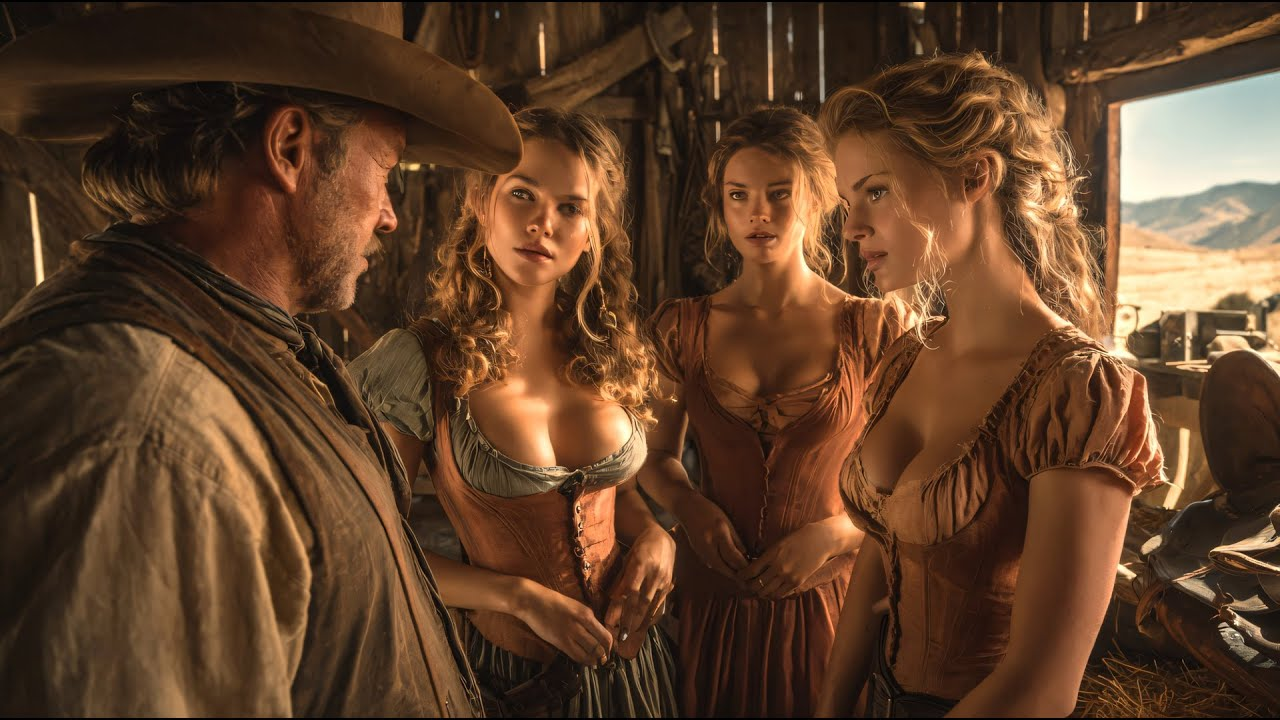
Clever parents soon realized that every adult daughter was a chance to expand the family’s holdings. When a daughter turned twenty-one, she could file her own claim, often on the land right next to her father’s. Together, a family with several grown daughters could build a ranch far larger than one man could claim alone.
The daughters had to meet the same requirements as anyone else. They had to live on their claims, build a dwelling, and work the land. Many of them did, riding fences, tending cattle, hauling water and breaking sod beside their fathers and brothers.
The Sisters’ Clever Trick
Living alone on an isolated claim could be lonely and dangerous. Some sisters and women friends came up with a smart solution.
They would file claims on neighboring pieces of land and build a single cabin right on the boundary line between them. Each woman slept on her own side of the house, which meant each one was technically living on her own claim.
These “line houses” let women share the work, the cost, and the company, while still meeting the law’s requirements.
How Many Women Homesteaded?
Historians who have studied land records found that women made up a significant share of homesteaders in some areas. In parts of states such as Colorado, Wyoming, and the Dakotas, women filed roughly one in ten claims, and in some districts even more.
And women were often as successful as men at proving up their claims. Many of them kept their land for life.
A Woman Homesteader’s Voice
One of the most famous women homesteaders was Elinore Pruitt Stewart. She was a young widow with a small daughter when she moved to Wyoming in 1909 to work as a housekeeper for a rancher and file a homestead claim of her own.
She wrote letters describing her life on the frontier, full of humor, hardship and love for the open country. They were published in 1914 as “Letters of a Woman Homesteader.”
Stewart believed homesteading offered poor women a real path to independence. In her view, a woman willing to work could build a far better life on her own land than she could ever find in a crowded city.
More Than Wives and Daughters
The story of the American West is often told as the story of men: cowboys, lawmen, outlaws and pioneers. But behind many ranches stood women who worked just as hard, and in many cases owned the very land beneath the family’s feet.
Daughters who filed claims at twenty-one, widows who started over alone, and sisters who shared a cabin on a boundary line all helped build the West. They were not waiting for someone to give them a future. They claimed it, 160 acres at a time.