In the third century AD, the Roman Empire was in crisis. Emperors were murdered one after another, armies fought each other, plague spread, and enemies attacked from every side. Historians call this period the Crisis of the Third Century.
In the chaos, one woman saw an opportunity, and she took it.
The Queen of Palmyra
Palmyra was a wealthy city in the Syrian desert, rich from the caravan trade that carried goods between the Roman world and the East. Its ruler, Odaenathus, was a loyal ally of Rome who had won great victories against Rome’s enemies, the Persians.
His wife was Zenobia.
Ancient writers described her as striking and intelligent, with dark eyes and a commanding voice. She was said to speak several languages, to have studied history and philosophy, and to have ridden and marched alongside her soldiers. She proudly claimed descent from Cleopatra, the famous queen of Egypt.
Around 267 AD, Odaenathus was assassinated. Their young son became king, and Zenobia ruled in his name. She soon showed she had ambitions far beyond Palmyra.
A Woman Against an Empire
With Rome distracted by its own troubles, Zenobia acted boldly. Her armies marched south and conquered Egypt, the richest province of the empire and a vital source of Rome’s grain.
Her forces then pushed into Asia Minor, taking control of much of the eastern Roman world. Coins were issued with her portrait, and she took the title Augusta, the title of a Roman empress.
For a time, Zenobia ruled one of the most powerful states in the Mediterranean. To many, she seemed a new Cleopatra, a queen of the East who could stand against Rome.
Aurelian Strikes Back
In 270 AD, a tough soldier named Aurelian became emperor. He was determined to reunite the shattered empire, and Zenobia was one of his first targets.
In 272 AD, Aurelian marched east. His legions defeated Zenobia’s army in major battles near Antioch and Emesa. Zenobia retreated to Palmyra and prepared for a siege.
When it became clear the city could not hold, the queen made a desperate attempt to escape. According to the ancient sources, she fled on a fast camel toward the Euphrates River, hoping to reach the Persians and find allies.
She almost made it. Roman horsemen caught her at the river’s edge.
Chains of Gold
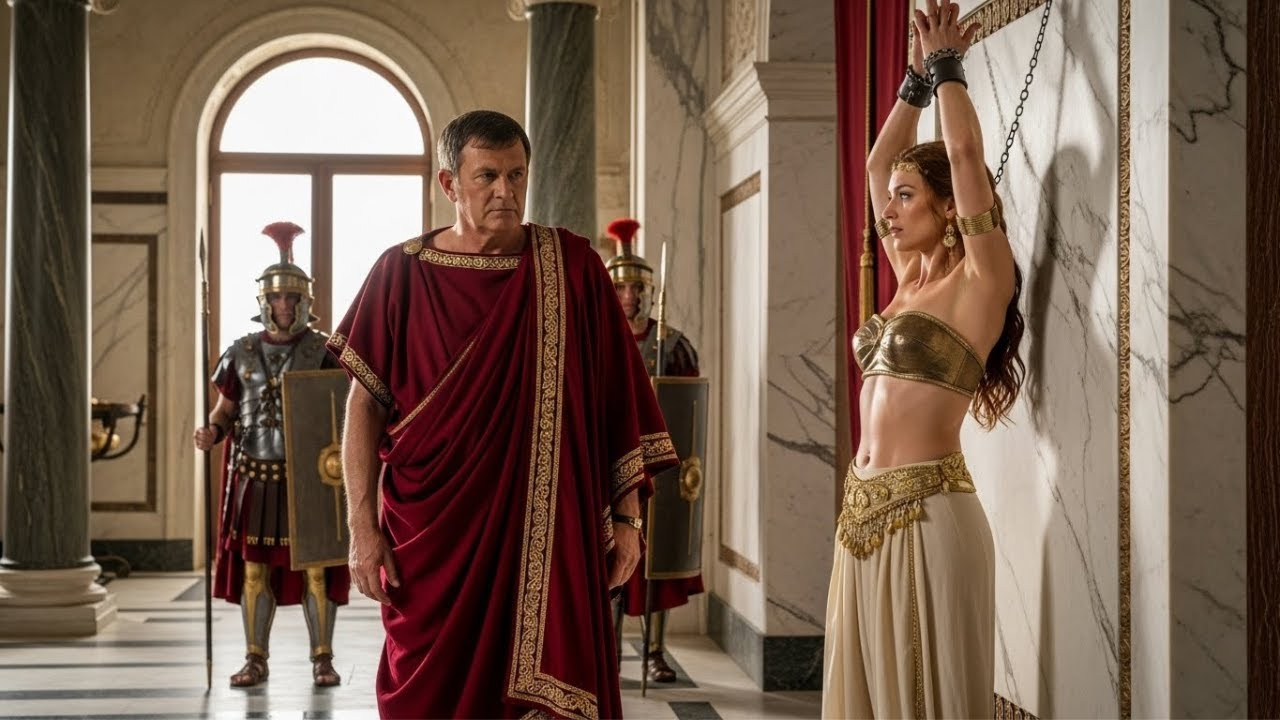
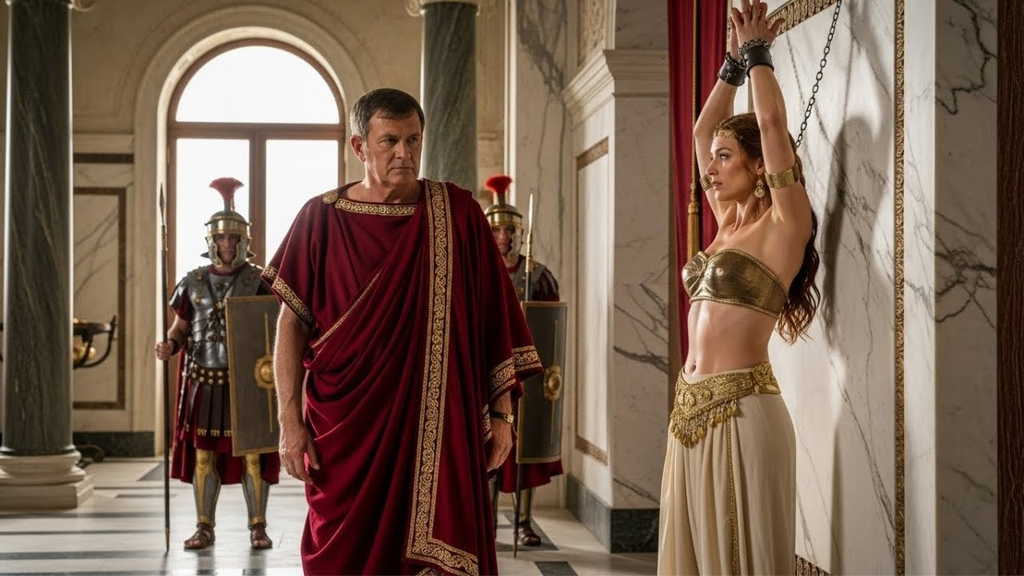
Aurelian brought Zenobia back to Rome. In 274 AD, he celebrated a grand triumph, a victory parade through the city’s streets, showing off the treasures and captives he had won.
According to the Historia Augusta, a Roman collection of imperial biographies, Zenobia was the star of the show. She was said to have walked through Rome covered in jewels and bound in chains of solid gold. The chains were supposedly so heavy that attendants had to help carry them.
The Historia Augusta is famous for exaggeration, so historians treat this description with caution. But the image of the proud queen in golden chains has fascinated people for centuries.
What Happened to Zenobia?
Captured enemy rulers in Rome were often executed after a triumph. Zenobia’s fate is less certain.
Some ancient writers claimed she died on the way to Rome or was executed. But the most famous account says Aurelian spared her life. She was given a comfortable villa at Tibur, near Rome, today’s Tivoli, where she lived out her days as a Roman noblewoman. Some sources even claim she married a Roman senator and had children.
If that version is true, the woman who once challenged the empire ended her life quietly within it.
A Legend That Lives On
Zenobia’s rebellion lasted only a few years, but her legend has lasted nearly two thousand. She became a symbol of courage, independence and defiance, celebrated in art, poetry and history.
In Syria, she is remembered as a national heroine. Around the world, she is remembered as the queen who dared to take on the mightiest empire of her age, and very nearly won.